
রোগতত্ত্ব, রোগ নিয়ন্ত্রণ ও গবেষণা ইনস্টিটিউট
গণপ্রজাতন্ত্রী বাংলাদেশ সরকার
কনটেন্টটি শেষ হাল-নাগাদ করা হয়েছে: মঙ্গলবার, ৩ মার্চ, ২০২৬ এ ০১:৩৪ PM
Community-Based Surveillance in Bangladesh
কন্টেন্ট: পাতা
Community-Based Surveillance (CBS) is a unique public health initiative of the Bangladesh Red Crescent Society (BDRCS), implemented in close collaboration with the Institute of Epidemiology, Disease Control and Research (IEDCR). The initiative is designed to enable early detection and timely response to public health threats, strengthening epidemic preparedness.
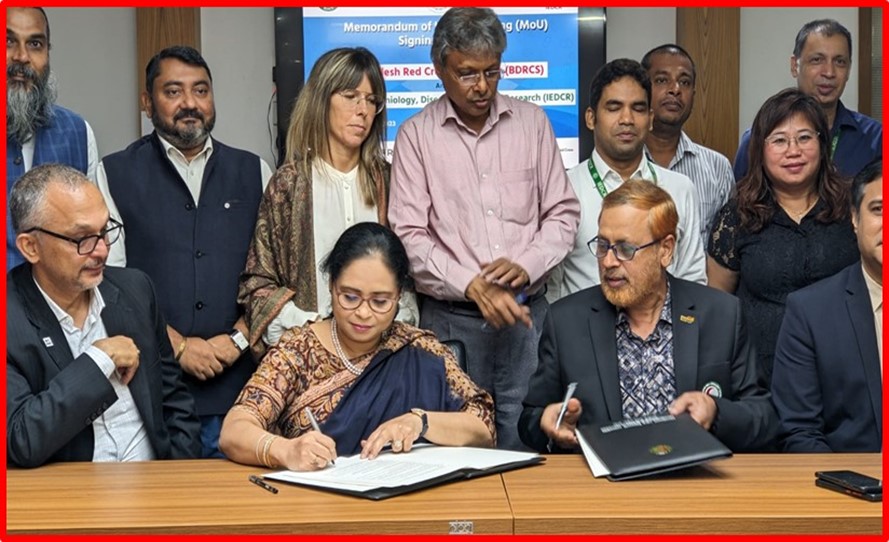
In 2023, BDRCS formalized its collaboration with IEDCR through a Memorandum of Understanding. As the national authority for disease surveillance, IEDCR provides technical leadership under this partnership, which aims to develop and sustain CBS as a complementary system to national surveillance and as a critical contributor to early warning mechanisms.
CBS is a simple, adaptable, and low-cost public health approach led by communities to protect their own populations. It complements and strengthens Bangladesh’s existing sentinel surveillance. The CBS model follows five standard surveillance steps used globally:
- Detection
- Triage
- Verification
- Risk assessment
- Response
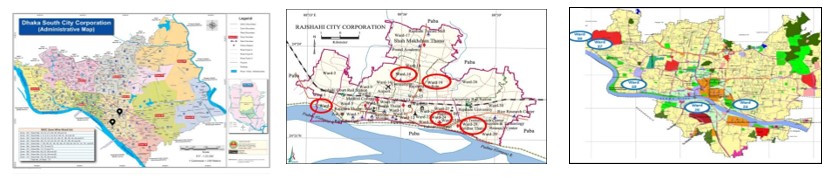
The pilot initially focused on urban settings, covering two wards in Dhaka South City Corporation, five wards in Rajshahi City Corporation, and five wards in Sylhet City Corporation.
system by ensuring rapid reporting from the community level. The collaboration between IEDCR and BDRCS led to the development of a comprehensive CBS Protocol, Guidelines, and Volunteer Manual. These tools strengthen organizational capacity and provide clear direction on community case definitions, data collection and analysis, quality assurance, stakeholder coordination, risk management, sustainability, and community engagement and accountability.
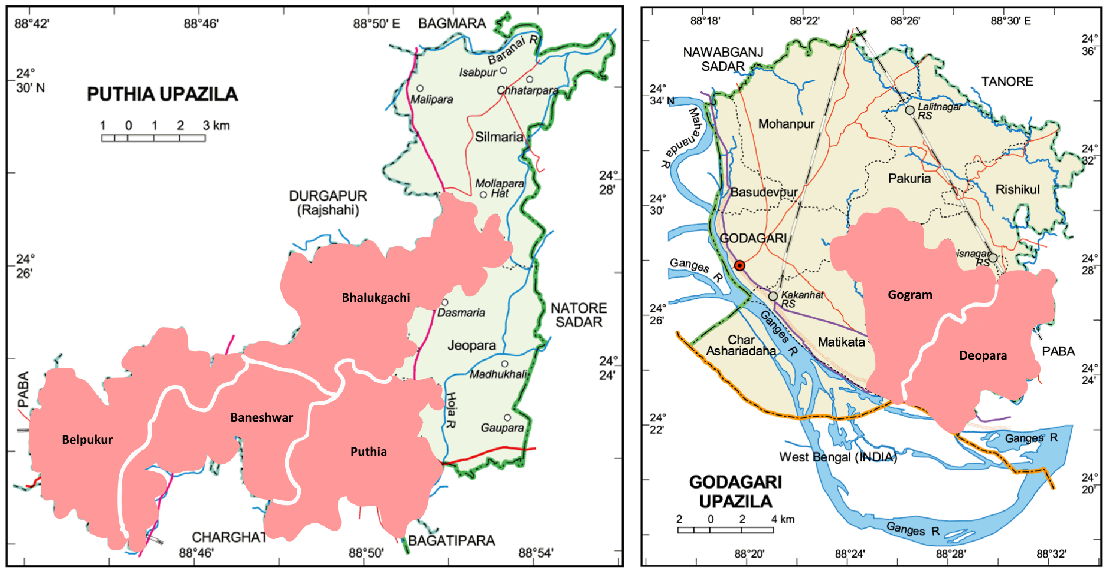
Building on the urban pilot, CBS has expanded into rural settings to further test and refine the model. The current rural implementation covers four unions in Puthia Upazila and two unions in Godagari Upazila of Rajshahi District.
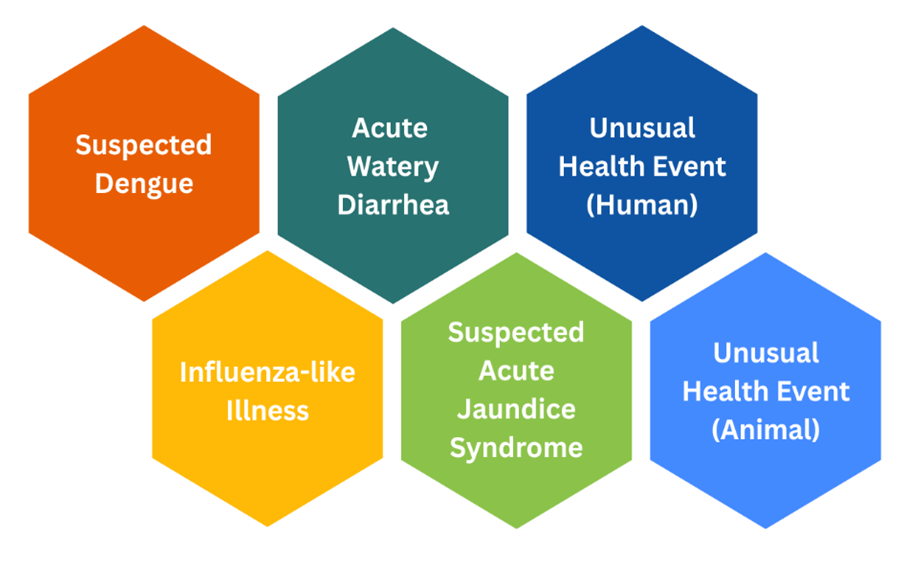
Through the joint efforts of BDRCS, IEDCR, and partners, CBS is now operational in these areas using real-time data collection through a customized mobile application. The system currently supports early detection of six priority events: influenza-like illness, acute watery diarrhea, acute jaundice syndrome, suspected dengue fever, and any unusual health events in humans and animals.
Objectives of CBS:
To contribute to earlier detection and notification of potentially serious and epidemic-prone risks/events, enabling timely response and control,
To improve the effectiveness of epidemic response operations with community-level real-time data to inform monitoring and targeted control actions.
Area Coverage
At present, 64 Community Volunteers of the BDRCS are actively collecting CBS data from the following targeted rural areas under the CBS project.
Upazila | Union |
Puthia Upazila | Baneshwar, Bhalukgachhi, Belpukur, and Puthia |
Godagari Upazila | Deopara and Gogram |
CBS in Rural Sites
CBS in Urban Sites
The initial pilot areas, which focused on urban settings, are detailed below:
The following diseases are being notified in the targeted communities
Disclaimer - Suspected cases are not confirmed cases. Confirmation requires lab investigation.